Flooring Installation in Gilbert, AZ
Tile, luxury vinyl plank, and wood-look flooring installation — level, precise, and built to last across every room.
Licensed & insured · 15+ years local · Free estimates — just call
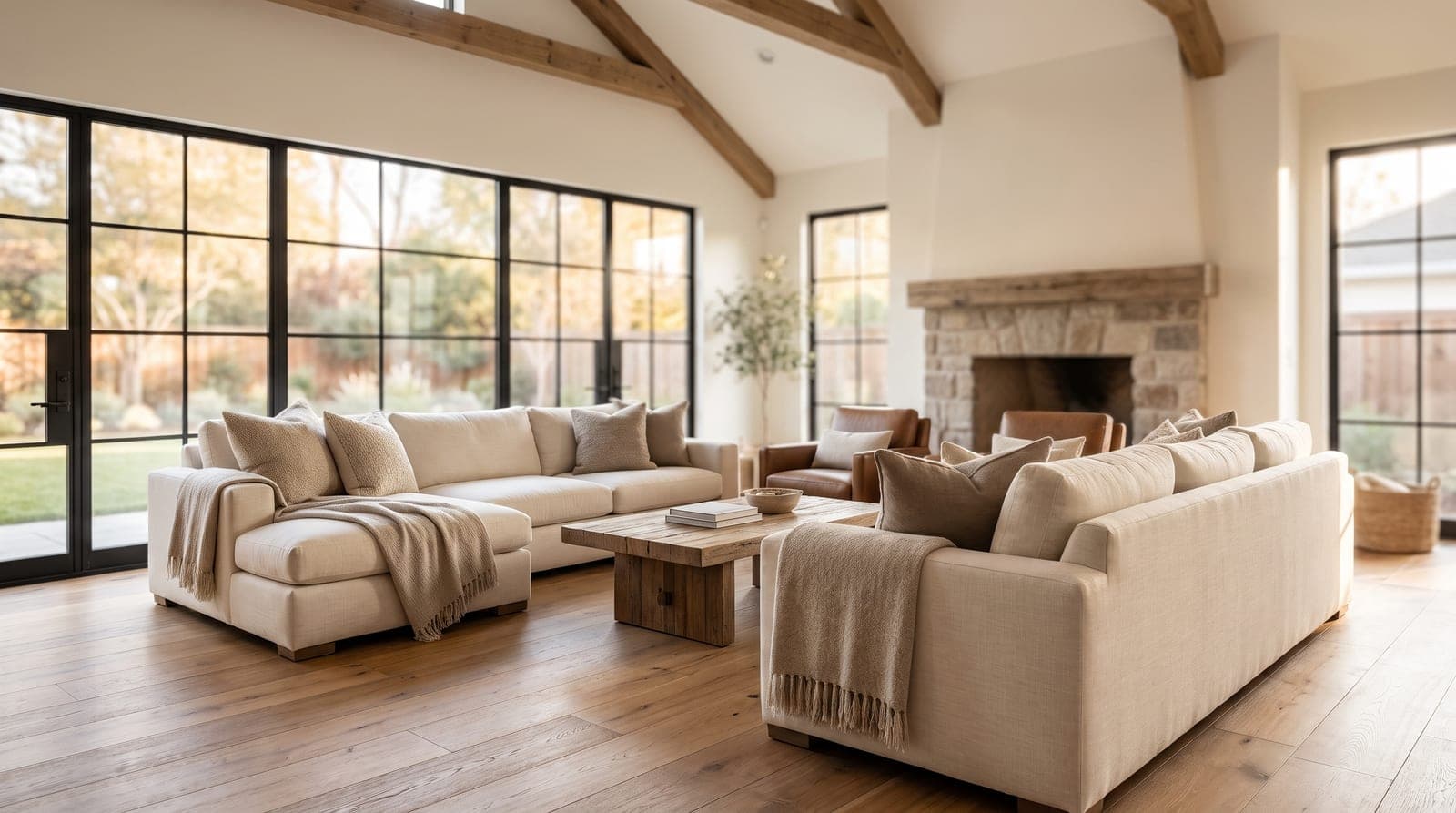
New flooring transforms a home faster than almost any other single upgrade, and getting it right is all about what happens under the surface. We install tile, luxury vinyl plank (LVP), and wood-look flooring with proper subfloor prep and leveling so the finished floor is flat, tight, and quiet — not a project that telegraphs every dip and seam a year later.
In Arizona, durable, low-maintenance, heat- and moisture-tolerant floors matter, which is why large-format tile and quality LVP are so popular here. We help you choose the right product for each room and how you live, then handle removal, subfloor prep, installation, transitions, and baseboards for a clean, finished result.
New flooring is the single fastest way to change how a home looks and feels, and across Gilbert and the greater East Valley it is one of the most requested projects we do. Fresh floors pull a whole room forward a decade in an afternoon of visual impact, tie disconnected spaces together, and quietly fix the thing everyone notices without naming it: the tired, scratched, or dated surface underfoot. But flooring is also the project where the gap between a good result and a bad one is almost entirely invisible on install day. Two crews can lay the exact same box of tile or plank over the same room and hand you two completely different floors — one that stays flat, tight, and quiet for decades, and one that telegraphs every dip, lifts at the seams, or cracks along a grout line within a year. The difference lives under the surface, in the prep, and that is exactly where we spend our attention.
The material choices that dominate our market are a direct response to the Arizona climate and how people here actually live. Large-format porcelain tile and quality luxury vinyl plank (LVP) have become the default for good reason: both shrug off heat, sun, spills, and the fine desert grit that gets tracked in year-round, and both ask very little of you in maintenance. Wood-look engineered and porcelain options give you the warmth of hardwood without the swelling, gapping, and refinishing headaches that solid wood suffers in our dry-then-monsoon humidity swings. We install all of it — tile, large-format porcelain, LVP, and wood-look — and just as importantly we help you choose the right product for each room, matching the floor to how hard the space gets used, how much moisture it sees, and the look you are after.
What sets our flooring work apart is that we treat it as the building assembly it actually is, not a drop-and-go retail install. We handle the whole job as one accountable team: removing and hauling away the old flooring, assessing and correcting the subfloor, leveling, managing moisture, laying the new floor precisely, and finishing it properly with clean transitions, thresholds, and baseboards so the edges look intentional rather than improvised. New flooring is also frequently one piece of a larger project — the floor that ties together a Kitchen Remodeling job, the waterproof surface in a Bathroom Remodeling update, or the continuous run that unifies a whole-home refresh under Home Remodeling — and we plan it to fit the bigger picture. On this page we walk through choosing between tile, LVP, and wood-look, why subfloor prep makes or breaks a floor, our installation process, what holds up to the Arizona climate, and what new flooring realistically costs in the East Valley.
What's Included
- Tile, large-format porcelain, and stone
- Luxury vinyl plank (LVP) and wood-look flooring
- Subfloor prep, leveling, and moisture control
- Transitions, thresholds, and baseboards
- Old-flooring removal and haul-away
- Whole-home and single-room installs
Choosing Your Flooring: Tile vs LVP vs Wood-Look
Tile — especially large-format porcelain — is the most durable, water-resistant, and heat-tolerant floor you can put in an Arizona home, and it is our go-to for kitchens, bathrooms, laundry rooms, entries, and increasingly whole homes. Porcelain does not scratch, fade, stain, or care about spills, and it stays cool underfoot in the summer, which is no small thing here. The modern move is toward large-format planks and panels with tight, rectified edges, because bigger pieces mean fewer grout lines — less to clean, less to discolor, and a calmer, more contemporary look. The trade-offs are honest ones: tile is harder underfoot and colder in winter, it is the most labor-intensive to install and remove, and it demands the flattest subfloor of any material, since large-format pieces will lippage and rock over dips that a small tile would hide. Done right, though, it is essentially a lifetime floor.
Luxury vinyl plank has earned its popularity across the East Valley by being the practical all-rounder. It is waterproof or highly water-resistant depending on the product, softer and warmer underfoot than tile, quieter, forgiving of the occasional dropped pan, and generally the most budget-friendly of the three to buy and install. Most quality LVP is a floating click-together system, though glue-down products exist for high-traffic or large open runs where you want maximum stability. LVP shines in bedrooms, living areas, and family spaces, and it is a strong choice for rental and resale-minded updates where you want a clean, durable, low-cost result. Its limits are worth knowing: the wear layer, not the price, determines how well it holds up, cheap thin planks scratch and dent and show every imperfection in the subfloor beneath them, and even the best LVP will not read as genuinely high-end the way porcelain or real wood does.
Wood-look flooring covers two different products that are easy to confuse. Wood-look porcelain tile gives you the appearance of planks with all the toughness and waterproofing of tile — a superb choice for our climate and for wet areas where you want warmth without risk. Engineered wood is real wood veneer over a stable plywood core; it looks and feels like hardwood because in the surface layer it is, and it handles our humidity swings far better than solid wood, though it still is not the pick for bathrooms or spaces that see standing water. Solid hardwood we generally steer homeowners away from in Arizona, because the dry desert air and monsoon-season swings make it prone to gapping and cupping. The right answer usually comes down to the room: tile and porcelain where water and wear are highest, LVP where comfort and value matter most, and engineered or wood-look porcelain where you want warmth. We walk every room with you and match the product to how you actually live, so you are not overbuying a luxury floor for a guest room or underbuilding in a kitchen that takes a beating.
Why Subfloor Prep Makes or Breaks a Floor
Here is the truth that separates a floor that lasts from one that fails: the finished material sitting on top matters far less than what is underneath it. Every flooring product — tile, LVP, wood-look, all of it — is only as flat, tight, and quiet as the subfloor it is installed over, and the single most common reason a floor disappoints is that the prep got shortcut to save a day and a few dollars. A dip you cannot even see with the naked eye becomes a hollow spot that cracks a tile, a rock under a large-format plank, or a soft, flexing patch under LVP that eventually opens a seam. We do not treat prep as optional or as an upsell. It is the job.
Flatness is the first requirement, and it is stricter than most people expect, especially for large-format tile. Manufacturers spell out a flatness tolerance — commonly something like an eighth of an inch over ten feet for big tile — and the bigger the piece, the less deviation it will tolerate before it lippages or rocks. Many Arizona slabs and older subfloors are simply not that flat out of the gate, so we check the whole floor with a straightedge, map the high and low spots, and correct them with self-leveling underlayment or a floating and patching process before anything gets laid. This is invisible work that nobody photographs, and it is the difference between a floor that feels solid everywhere and one that clicks, gives, or cracks in the spots the crew rushed past.
Moisture control is the other make-or-break, and it is easy to underestimate in a place as dry as Phoenix. Concrete slabs — which is what most East Valley homes sit on — can carry and transmit moisture vapor up from the ground long after they look and feel bone dry on top, and that vapor is the enemy of adhesives and of any wood-based product. Where it matters we test the slab, and we install the appropriate moisture barrier or vapor-mitigating underlayment so trapped moisture cannot debond a glued floor or swell an engineered plank from below. We also make sure the subfloor is clean, sound, and free of old adhesive ridges, high spots, and debris that would print through the new floor. When we open up an old floor in an aging Mesa, Tempe, or Chandler home and find water damage, a failing patch, or a subfloor problem, we show it to you and fix it before we build back — because burying it just guarantees the new floor inherits the old floor's failure.
Our Installation Process
Every flooring project starts with an in-home measure and consultation, because the only way to quote a floor honestly is to see the actual rooms, the existing flooring, and the condition of what is underneath. We measure precisely, look at the subfloor and any transitions to adjoining spaces, talk through your product options and how each room gets used, and account for the details that separate a clean job from a rough one — how the new floor will meet cabinets and doorways, where transitions fall, and how baseboards and thresholds will finish the edges. From there you get a detailed, fixed-price quote and a clear schedule, so you know the full investment and the timeline before we start. If we expect a room might hold a surprise under the old flooring, we tell you that up front and explain how we would handle it rather than springing a change order later.
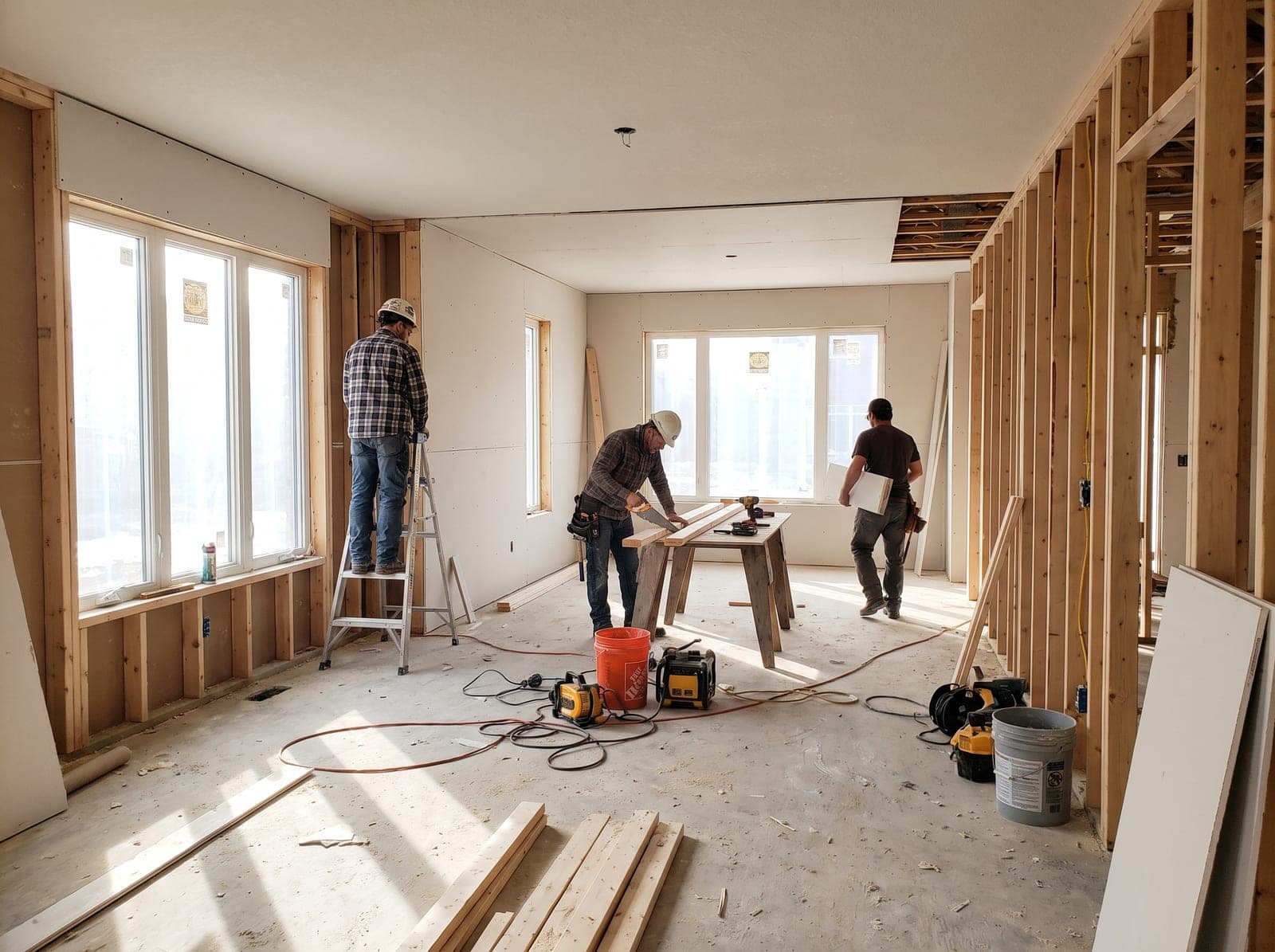
Construction begins with removal and haul-away of the existing flooring, done with dust containment and protection for the rest of your home. This step is more involved than it sounds, particularly with old tile or glued-down material, and it is another place where the subfloor's true condition finally comes to light. With the old floor gone, we clean the substrate completely and move into the prep that actually determines the outcome: checking flatness across the whole space, correcting high and low spots with leveling or patching, addressing moisture where the slab calls for it, and installing the correct underlayment for the product going down. We do not lay a single piece until the floor beneath it is flat, sound, dry, and clean.
Then comes the install itself, done to the standard the material deserves. For tile and porcelain that means proper thinset coverage, careful layout so cuts land where they should and grout lines stay straight, back-buttering and leveling clips on large-format pieces to beat lippage, and correct grout and cure times built into the schedule on purpose. For LVP and wood-look it means acclimating the material, planning the plank layout and direction for the best look, leaving the right expansion gaps, and staggering seams properly so the floor stays tight and natural-looking. We finish every job the same way: clean, purposeful transitions and thresholds between rooms and materials, new or reset baseboards and quarter-round so the perimeter looks intentional, a thorough clean-up, and a final walkthrough with you. One in-house team owns the project from the first measurement to the last piece of trim, and we back the workmanship with a warranty.
Flooring That Holds Up to the Arizona Climate
Arizona is genuinely hard on flooring, just not in the ways people expect. It is not water in the everyday sense so much as intense heat, relentless UV through big desert-facing windows, extreme dryness punctuated by monsoon humidity, and the endless fine grit that comes in on shoes and pets and acts like sandpaper on a soft surface. A floor that thrives here has to handle all of that without fading, gapping, scratching, or swelling — which is precisely why large-format porcelain tile and quality LVP have become the default across the East Valley. Porcelain does not fade in the sun, does not scratch under grit, does not swell in humidity, and stays cool underfoot when the slab it sits on is one of the coolest surfaces in a July house. It is about as close to climate-proof as flooring gets here.
LVP earns its place with waterproofing and stability, but the details matter more than the marketing. In a home with large windows and direct desert sun, we steer homeowners toward products rated to resist fading and toward wear layers thick enough to stand up to grit and traffic, because a bargain plank will fade in a sunbeam and scratch under a dog's nails in a way a quality one will not. We also pay attention to expansion: floating floors move with temperature swings, and in a house that bakes during the day and cools at night that movement is real, so correct expansion gaps at every wall and transition are what keep a floating floor from buckling or opening seams. This is exactly the kind of climate-specific judgment that a see-the-room-in-person installer brings and a drop-ship retail crew does not.
Solid hardwood is the material we most often talk homeowners out of, and it is worth explaining why rather than just saying no. Real wood is hygroscopic — it takes on and gives off moisture with the surrounding air — and Arizona's swing from bone-dry winters to humid monsoon weeks makes solid planks expand and contract enough to gap, cup, or crown over time. If you love the look of wood, we point you to engineered wood, which is far more dimensionally stable thanks to its plywood core, or to wood-look porcelain and premium wood-look LVP, which give you the warmth of hardwood with none of the seasonal drama. Matching the material to the climate this way is the same durability-first thinking we bring to a whole-home floor in a Home Remodeling project or the hardworking surfaces in a Kitchen Remodeling or Bathroom Remodeling job: the best-looking floor is the one that still looks that good in ten Arizona summers.
What New Flooring Costs in the East Valley
Flooring is priced by the square foot, and the all-in number for a project comes down to four things: the material you choose, how many square feet you are covering, how much old flooring has to be removed and hauled away, and — the factor most estimates hide — how much subfloor prep the room actually needs. As broad planning ranges in the Gilbert and greater East Valley market, quality LVP installed typically runs on the more affordable end, wood-look and engineered products sit in the middle, and tile and large-format porcelain generally run highest because the material, the labor, and the prep are all more demanding. Every one of those is a range, not a fixed price, because the same material can cost meaningfully more in a room that needs extensive leveling than in one with a flat, sound slab ready to go.
That prep variable is the one to watch when you compare quotes, because it is where a lowball bid quietly cuts a corner. A quote that assumes your subfloor is perfectly flat and dry, then hits you with a change order once the old floor comes up, is not actually cheaper — it just moved the cost to a moment when you have no leverage. When we measure, we account for the leveling, moisture control, and any subfloor repair the room genuinely needs and put it in the fixed price up front. Removal and haul-away is the other line that varies: pulling up old glued-down tile is far more labor than lifting a floating floor, and that shows up in the number. Stairs, intricate patterns, lots of small rooms and closets, and tricky transitions to existing floors all add labor as well, while a large, open, simple run is the most efficient per square foot.
We price flooring the honest way — a detailed, fixed-price quote after an in-home measure of your actual rooms, not a per-foot guess over the phone — and that number holds unless you change the scope or we uncover a hidden condition we show you first. Because new flooring is so often part of a bigger project, we can quote it as a standalone install or fold it into a larger Kitchen Remodeling, Bathroom Remodeling, or whole-home Home Remodeling scope, which frequently makes sense: running one continuous floor while the space is already torn up and coordinated is more efficient than doing it piecemeal later. Either way you get one firm number, one schedule, and one accountable team standing behind the floor long after it is installed.
Flooring Installation FAQs
What flooring holds up best in Arizona homes?
How much does new flooring cost?
Do you have to remove the old flooring first, or can you install over it?
How flat does my subfloor need to be, and what if mine is not?
Is LVP or tile better for a home with dogs and kids?
Can you match new flooring into rooms that already have flooring I am keeping?
How long does a flooring installation take and can I stay in my home?
Talk to a real Gilbert contractor
No forms, no waiting on a callback. Call now for a free, no-obligation quote — we answer the phone.
(602) 932-3354Tap to call
- Hours
- Mon – Sat: 7:00 AM – 6:00 PM
- Sunday: By Appointment
- Licensed & insured
- 15+ years serving the East Valley
Local Service
Flooring Installation Near You
We provide flooring installation across the East Valley. Choose your city for local details.
How It Works
Our Process
- 1
Free Consultation
Call for a free quote. We visit, listen to your goals, and assess the space.
- 2
Design & Fixed Quote
You get a detailed plan and a transparent, fixed-price quote — no surprises.
- 3
Permits & Build
We pull permits and build with licensed in-house crews, keeping you updated.
- 4
Final Walkthrough
We walk the finished project together and stand behind our workmanship.
Reviews
What Our Clients Say
“Clear communication, on-time delivery, and the results exceeded our expectations. Our kitchen is unrecognizable — in the best way.”
“They handled the permits and construction seamlessly. We now have a beautiful ADU for Linda's mother, and it was far less stressful than we feared.”
“No hidden costs, no surprises. The quote was the price, the schedule was the schedule. I'd hire them again in a heartbeat.”
Explore More
Related Services
Ready for your flooring installation project?
Call now for a free, no-obligation quote from Gilbert's trusted licensed general contractor. We answer the phone.