Pavers & Hardscaping in Gilbert, AZ
Paver patios, driveways, walkways, and retaining walls — durable, beautiful hardscaping engineered for the desert.
Licensed & insured · 15+ years local · Free estimates — just call
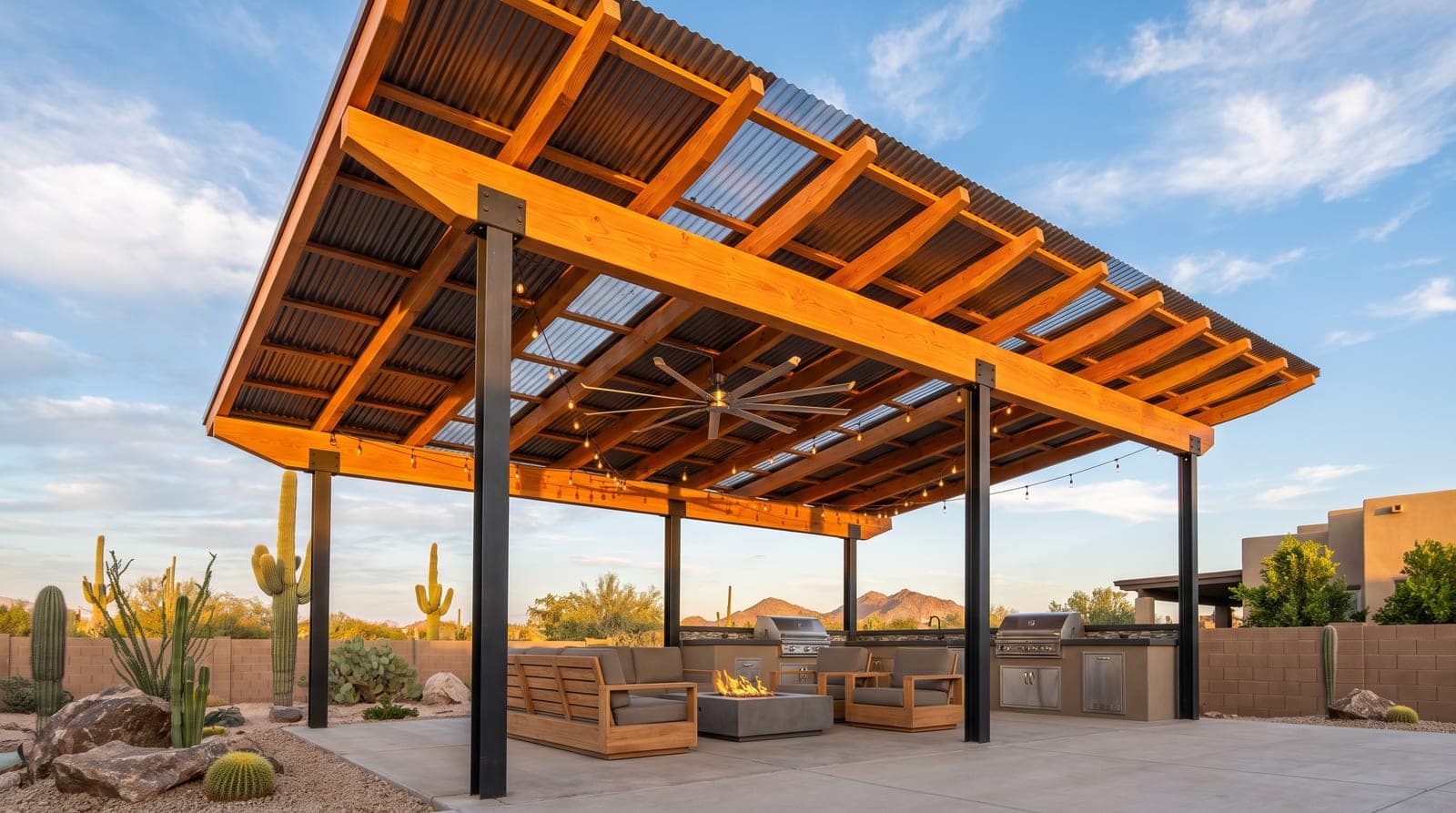
Hardscaping is the backbone of Arizona outdoor living, and pavers are the material of choice — they're durable, they handle the heat and monsoon runoff, and individual pavers can be lifted and reset if the ground ever shifts. We design and build paver patios, driveways, walkways, pool decks, and retaining walls, plus fire pits and seat walls that turn a bare backyard into a place you actually use.
The difference between hardscaping that lasts and hardscaping that heaves and settles is the base. We excavate and compact a proper aggregate base, set the pavers correctly, and handle grading and drainage so water flows away from your home — the unglamorous details that keep a patio or driveway flat and solid for decades.
Hardscaping is the backbone of Arizona outdoor living, and in the East Valley it does more work than almost anywhere else. Our yards are not lawns to mow so much as outdoor rooms to live in, and the hard surfaces — the patio you eat dinner on, the driveway you pull into every day, the walkway that ties the front door to the street, the deck that rings the pool — are what make those rooms usable. Get the hardscaping right and a bare, sun-baked lot becomes a place your family actually spends its evenings; get it wrong and you are looking at cracked, heaving, weed-choked surfaces within a few short years. Pavers are the material we build most of it from, because in this climate and this soil they simply outperform the alternatives over the long haul.
The reason pavers win here comes down to how the desert treats things. Poured concrete is one continuous slab, and when the ground moves — as our expansive clay soils do when they swell with monsoon moisture and shrink back in the dry heat — that slab has nowhere to go but into a crack. Pavers are individual units set over a flexible, compacted base, so they ride small ground movements instead of fighting them, and if a section ever does settle or a tree root lifts a corner, we can pull those pavers, correct the base, and reset them so the repair disappears. You cannot do that with a cracked slab; you live with it or you tear it out. That single difference — the ability to lift and reset — is why pavers are the material of choice for homeowners who plan to keep their homes and want their outdoor surfaces to still look good in fifteen years.
But the paver itself is only the part you see, and it is not the part that determines whether the project lasts. Everything rides on what is underneath and how the site is graded: proper excavation, a correctly compacted aggregate base, and grading and drainage that send monsoon runoff away from your foundation rather than pooling against it. This is the unglamorous engineering that cut-rate crews skip to hit a low number, and it is exactly where a patio or driveway is won or lost. On this page we walk through pavers versus concrete in our specific conditions, why the base is everything, the range of surfaces and walls and fire features we build, and what a hardscaping project realistically costs in the East Valley — so you can plan yours with clear eyes and know what separates a lasting installation from one that fails.
What's Included
- Paver patios, driveways, and walkways
- Travertine and paver pool decks
- Retaining walls and seat walls
- Fire pits and outdoor features
- Proper base excavation and compaction
- Grading and drainage done right
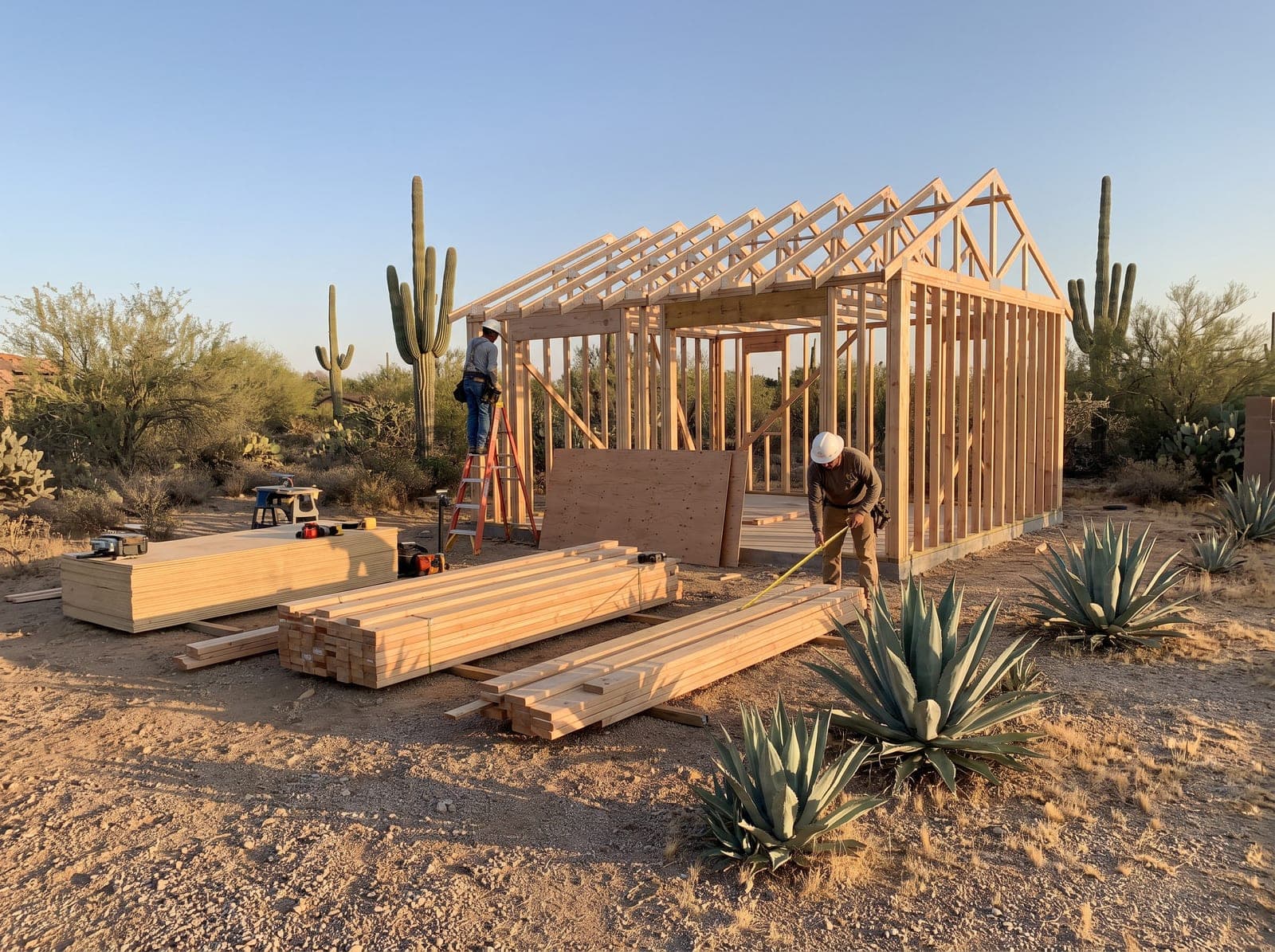
Pavers vs Concrete in the Desert
The question we hear more than any other is whether pavers are really worth it over a poured concrete slab, and the honest answer is that it depends on what you value — but in Arizona the case for pavers is unusually strong. Concrete's weakness is that it is rigid and monolithic. Our soils across Gilbert, Chandler, Queen Creek, and the wider East Valley are heavy in expansive clay that swells when the monsoon soaks it and contracts hard as it dries out through the summer, and that seasonal movement puts enormous stress on anything laid over it in one solid piece. Concrete answers that stress with cracks. Control joints help steer where those cracks appear, but they do not prevent them, and once a slab cracks the only real fixes are cosmetic patching that never quite matches or a full tear-out and repour.
Pavers handle the same ground movement completely differently. Because the surface is made of many small units set over a flexible sand-and-aggregate bed, it flexes with the soil instead of resisting it — minor movement is absorbed across the joints rather than concentrated into a fracture. The interlocking pattern spreads load outward, so a driveway of pavers can carry vehicle weight without the single-point cracking a slab is prone to. And the repairability is genuinely unique to the material: if a paver stains, a section settles, or a utility trench has to be dug through the middle of your patio, we lift the affected pavers, do the work, and reset the same pavers so there is no patch and no color mismatch. A concrete slab in that situation gets a saw cut and a visible gray scar for the life of the surface.
Concrete still has its place — it is often less expensive up front, and for some utilitarian slabs it is the sensible pick. Where pavers pull ahead is total cost of ownership and appearance. They resist the cracking and heaving that force concrete replacement, they stay cooler and more slip-resistant underfoot than a smooth troweled slab in our sun, and they read as a higher-end, custom surface that lifts the look of the whole property. Stamped concrete tries to mimic that look but still cracks like the slab it is, and the stamped pattern breaks right across the fracture. We are glad to compare both honestly for your project and budget, but for patios, driveways, and pool decks meant to last decades in desert soil, pavers are usually the better long-term investment.
Why the Base Is Everything
If there is one thing to understand about hardscaping, it is that a paver installation is only as good as what you cannot see beneath it. The pavers on top are essentially the finish; the base is the structure, and the difference between a patio that stays dead flat for twenty years and one that ripples, sinks, and heaves within two is entirely a question of how the base was built. This is precisely the detail low-bid crews cut, because it is buried, hard to inspect after the fact, and expensive to do right — and it is the reason we never shortcut it. When a paver project fails in the East Valley, the pavers are almost never the problem. The base is.
Doing it correctly starts with real excavation. We dig out to a proper depth — deeper for a driveway that carries vehicles than for a walkway, because the load is greater — removing not just the surface but the loose, organic, or unstable soil that would settle later. Then we build up and compact an aggregate base in lifts, meaning we add the crushed rock in layers and mechanically compact each layer rather than dumping it all at once and rolling over the top, which leaves the lower material loose and destined to settle. Compaction is not optional and it is not a formality; uncompacted or under-compacted base is the single most common cause of the low spots and waves you see in cheap paver jobs around the Valley. Over that compacted base we screed a precise setting bed, lay the pavers to the pattern, compact them into the bed, and lock the whole field with edge restraints and joint sand so nothing migrates or spreads over time.
The other half of the base story is grading and drainage, which in Arizona is not a nicety — it is protection for your home. Our rain arrives in violent monsoon bursts that dump an inch in twenty minutes, and all that water has to go somewhere. A properly built patio or driveway is graded with deliberate, subtle slope that carries runoff away from your foundation and toward the yard, a drain, or the street, never toward the house. We plan that drainage before we lay a single paver, building the pitch into the base and adding channel drains or permeable joints where the site calls for them. This is also where hardscaping ties directly into the outdoor structures that often share the space — when we build a patio that sits under a new Patio Cover or Ramada, the grading has to coordinate with that structure's footings and the roof's runoff so everything drains as one system. Skip the drainage and the prettiest pavers in the world become a pond against your slab every July.
Patios, Driveways, Walkways, and Pool Decks
Paver patios are the heart of most of what we build, because the patio is where East Valley outdoor living actually happens. We design them around how you use the space — an intimate dining area off the kitchen slider, a sprawling entertaining surface that flows from one zone to the next, a shaded lounge that wraps around a fire feature. Paver patios pair naturally with the rest of a backyard build, and we frequently lay one as the floor beneath a new shade structure or beside a built-in cooking area, coordinating the surface, the grading, and the utility runs so the finished space works as a single outdoor room rather than a set of disconnected projects. The paver style, color, and laying pattern all get chosen to match your home and the look you are after, from clean contemporary large-format units to tumbled, old-world textures.
Driveways are where the base work matters most, because a driveway carries thousands of pounds of vehicle weight every day and sits out in the full, unfiltered Arizona sun. A paver driveway built on a deep, properly compacted base spreads that load across the interlocking field and rides the seasonal soil movement that would crack a concrete slab, and it gives the front of the home a genuinely upscale first impression that a plain gray slab never will. It is also repairable in a way a driveway slab is not — an oil stain or a settled section is a lift-and-reset, not a permanent eyesore. Walkways and paths do the connective work of the property, tying the driveway to the entry, the side yard to the back, the patio to the pool, and because they are narrower we can be more expressive with borders, banding, and pattern to lead the eye and dress up the approach to the house.
Pool decks are a specialty of their own in this climate, and material choice matters more here than anywhere else on the property. A pool deck bakes in direct sun and is walked on by bare feet, so surface temperature and slip resistance are not aesthetic preferences — they are comfort and safety. Travertine is a favorite for exactly this reason: the natural stone stays noticeably cooler underfoot than many surfaces and offers excellent traction even wet, which is why so many East Valley pool decks are travertine or a paver chosen for its cooler, textured surface. We build the deck with the drainage and expansion detailing a pool surround demands, keep the surface true so there are no toe-catching lips at the coping, and tie it into the surrounding patio and hardscape so the whole backyard reads as one deliberate design rather than a pool dropped into a field of mismatched surfaces.
Retaining Walls, Seat Walls, and Fire Features
Hardscaping is not only the flat surfaces underfoot — the vertical elements are what give a yard structure, usable levels, and a finished, designed feel. Retaining walls are the workhorses of that category, and on the sloped and terraced lots common across the East Valley, and especially in the foothill neighborhoods of Ahwatukee, Mesa, and the areas up against the mountains, they do real engineering work. A retaining wall holds back soil to create a level, usable pad where the natural grade would give you an unusable slope, and it manages how water moves across a graded lot. Built correctly, that means proper footings, the right block or stone for the load, and — critically — drainage behind the wall so hydrostatic pressure from monsoon water does not build up and push the wall out over time. A retaining wall that fails is a serious and expensive problem, so the same base-and-drainage discipline we bring to a patio applies double to anything holding back earth.
Seat walls are the lower, softer cousin of the retaining wall, and they are one of the most rewarding features we build. A seat wall defines the edge of a patio, encloses a gathering space, and — as the name says — gives you built-in seating that means a crowd never runs out of somewhere to sit without hauling out folding chairs. We wrap them in stone veneer, stucco, or paver caps to match the home and the surrounding hardscape, and we often build them as the border of a patio or the surround of a fire feature so they do double duty as structure and seating. Because they are permanent and integrated, seat walls make a backyard feel intentionally designed in a way that scattered furniture never does.
Fire features are the anchor that makes a backyard usable on cool desert evenings, and our long, mild shoulder seasons mean a fire pit or fireplace genuinely earns its keep here for much of the year. We build wood-burning and gas fire pits, linear fire tables, and full built-in fireplaces, integrating them into the patio and seat walls so the fire feature is the natural center of gravity for the whole space rather than an afterthought parked on the lawn. When a fire feature runs on gas, we coordinate the gas line as part of the build the same way we would for an Outdoor Kitchen — and in fact fire features, seat walls, cooking areas, and paver patios are so often built together that we design them as one project whenever a homeowner is building out a real backyard. The result is an outdoor living space with a floor, walls, and a hearth: an actual room, outside.
What Pavers and Hardscaping Cost in the East Valley
Hardscaping cost covers a wide range, because the category does — a modest paver walkway and a full backyard build with a patio, pool deck, retaining walls, seat walls, and a fire feature are simply not the same project. The honest drivers of cost are square footage, the paver or stone you select, the amount and difficulty of the base excavation, the site's grading and drainage needs, and how many vertical features and walls are involved. Material choice alone moves the number meaningfully: a standard concrete paver sits at one end, while natural travertine, premium porcelain pavers, or a high-end stone veneer on walls sits well above it. A flat, easy-access yard with clean soil costs less to prepare than a sloped lot, a tight side-yard access that forces material to be moved by hand, or a site where we have to haul off poor soil and import base. Because the range is so wide, we do not quote hardscaping off a per-foot menu — we assess your specific yard, soil, drainage, and goals, then give you a detailed, fixed-price quote so you know the full investment before we break ground.
A few conditions specific to our market move the number, and we would rather flag them honestly than surprise you mid-project. Access is a real one: many East Valley backyards are reached only through a narrow gate, which means base rock, pavers, and spoils get moved by wheelbarrow or a compact machine rather than driven in, and that labor is part of an accurate bid. Soil is another — where we encounter especially expansive clay or unstable ground, the base has to be built deeper and more carefully to keep the surface flat, and doing that correctly costs more than pretending the soil will behave. Drainage work, tear-out and disposal of an old cracked slab, and the excavation and footings for retaining walls all add to the scope where the site requires them. These are exactly the line items a low bid leaves out and a failing installation later reveals.
The reason it is worth spending on the base rather than the biggest possible paver upgrade is that the base is what makes the whole investment last. A gorgeous paver never rescues a patio built on uncompacted fill; a properly built base keeps even a modest paver flat and solid for decades. That is where our money and attention go, and it is why we quote the way we do — a fixed price, based on a real look at your yard and its drainage, that holds unless you change the scope. Because so many hardscaping projects are one piece of a larger outdoor build, we can price a standalone patio or driveway, or fold it into a coordinated plan alongside a Patio Cover, an Outdoor Kitchen, or the groundwork for a detached Casita or Guest House — so you get one firm number, one schedule, and one accountable team standing behind the surfaces you will walk on every day.
Pavers & Hardscaping FAQs
Are pavers better than concrete in Arizona?
How much does a paver patio or driveway cost?
How long do paver patios and driveways last in Arizona?
Will weeds and ants come up through the paver joints?
Do pavers get too hot to walk on around a pool?
Can you install pavers over my existing concrete slab or driveway?
Do hardscaping projects need a permit or HOA approval in the East Valley?
Talk to a real Gilbert contractor
No forms, no waiting on a callback. Call now for a free, no-obligation quote — we answer the phone.
(602) 932-3354Tap to call
- Hours
- Mon – Sat: 7:00 AM – 6:00 PM
- Sunday: By Appointment
- Licensed & insured
- 15+ years serving the East Valley
Local Service
Pavers & Hardscaping Near You
We provide pavers & hardscaping across the East Valley. Choose your city for local details.
How It Works
Our Process
- 1
Free Consultation
Call for a free quote. We visit, listen to your goals, and assess the space.
- 2
Design & Fixed Quote
You get a detailed plan and a transparent, fixed-price quote — no surprises.
- 3
Permits & Build
We pull permits and build with licensed in-house crews, keeping you updated.
- 4
Final Walkthrough
We walk the finished project together and stand behind our workmanship.
Reviews
What Our Clients Say
“Clear communication, on-time delivery, and the results exceeded our expectations. Our kitchen is unrecognizable — in the best way.”
“They handled the permits and construction seamlessly. We now have a beautiful ADU for Linda's mother, and it was far less stressful than we feared.”
“No hidden costs, no surprises. The quote was the price, the schedule was the schedule. I'd hire them again in a heartbeat.”
Explore More
Related Services
Ready for your pavers & hardscaping project?
Call now for a free, no-obligation quote from Gilbert's trusted licensed general contractor. We answer the phone.